The MilitaryNerd | Online Edition #1258

World War II

The Second World War was the most extensive and expensive conflict in human history. Its magnitude was really worldwide, impacting nearly every region of the earth. The political geography of the planet underwent a transformation at its conclusion. While one might overstate the significance of the 1945 victory, the transformation from the pre-war era characterized by economic turmoil, European imperialism, and aggressive nationalism to the post-war period marked by economic prosperity, decolonization, and the ideological conflict of the Cold War was indeed profound.

It is important to recall that initially, no one could ascertain the trajectory of the conflict or predict the extent of the ensuing carnage and violence. Various areas of conflict converged, akin to distinct flames merging into a singular inferno: the European dispute regarding Germany's attempts to dismantle the restrictions imposed following its defeat in World War I; the tensions instigated by an expansionist and ambitious Fascist Italy under Benito Mussolini, who aspired to resurrect the Roman Empire; the war in Asia waged by Imperial Japan, intent on asserting the rights of non-white peoples to partake in imperialism; and in western Asia, an alliance of anti-Communist states surrounding Hitler's Germany, which initiated a campaign against the nascent Soviet regime in 1941.
12 results - showing 1 - 10
1 2
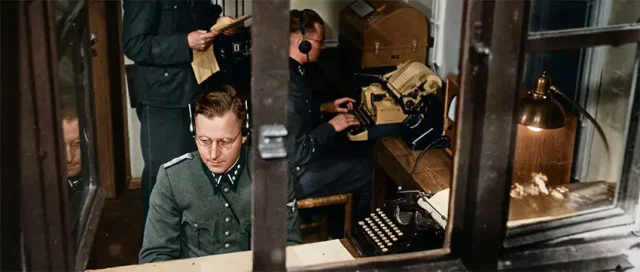
At 08:00 hours on August 31, 1939, a contingent of German soldiers masquerading as Poles “assaulted” a German customs facility on the Polish-German border and temporarily seized a German radio station. The “Poles” subsequently withdrew, leaving numerous corpses as evidence of the confrontation. The corpses, attired in German uniforms, were victi...
From Erwin Rommel's point of view, things did go “all fine.” Four days later, thanks to his daring leadership, his division pushed past the French positions on the River Meuse. In the days that followed, his tanks - and a host of tanks from other panzer divisions - surged into northern France, heading for the English Channel. By June 1940, Franc...
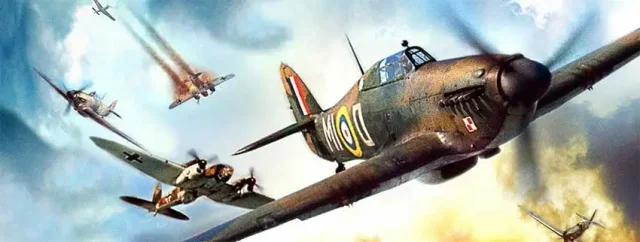
On September 7, 1940, shortly after 17:00 hours, nearly 300 German bombers, escorted by twice as many fighters, launched an attack on London's East End. They bombed Woolwich Arsenal, a power station, a gas plant, the docks, and the city. Two hours later, a further 200 bombers appeared. The bombing continued throughout the night, with the final a...

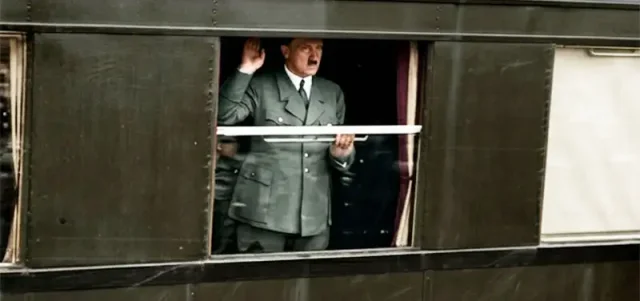
Adolf Hitlers Führersonderzug and Reich Chancellery (1939-1940)

Adolf Hitlers Military Headquarters WWII
By the summer of 1939 all military preparations for the planned attack against Poland, code-named ‘Case White’ (Fall Weiss), had been issued to the armed forces. As the second half of August 1939 began, German military chiefs pushed forward their final plans to destroy Poland and liberate its western parts from an area that was predominantly Ger...

Adolf Hitlers Felsennest, Wolfsschlucht, and Tannenberg (1940)

Adolf Hitlers Military Headquarters WWII
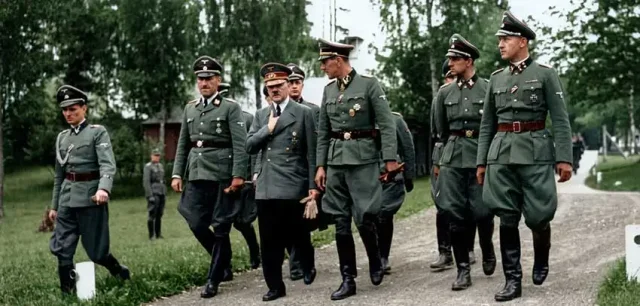
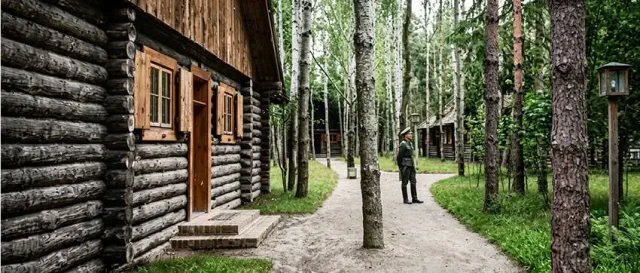
The name ‘Felsennest’ was taken from a 400-meter-high wooded hilltop overlooking the hamlet of Rodert. The installation covered some 30 hectares with bunkers and a string of anti-aircraft emplacements with an assortment of barrack-type buildings.

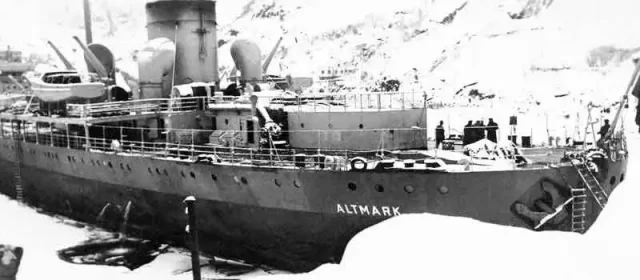
Altmark Incident - 16th February 1940

World War II European Theater
On the 16th of February 1940, a boarding party from the British Royal Navy seized the German supply ship Altmark in the territorial waters of then-neutral Norway and freed several British POWs. This incident contributed to Nazi Germany's plan to invade Denmark and Norway.

Adolf Hitlers Wolfschanze - Wolf's Lair (1941–1942)

Adolf Hitlers Military Headquarters WWII
At first light on the morning of 23 June 1941, Hitler authorized that his special train, the Führersonderzug 'Amerika,' be readied to take him and his headquarters entourage by rail to East Prussia. He also requested that the various echelons of 'Supreme Headquarters’ follow ‘Amerika’ by either rail or air.

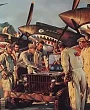
Doolittle Raid (Tokyo Raid) - April 1942

World War II Pacific Theater
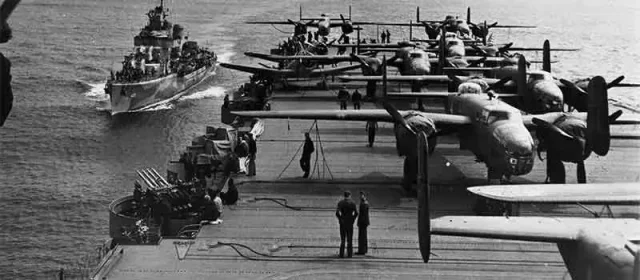
On the 18th of April 1942, 16 American medium bombers commanded by Colonel James Harold Doolittle took off from the aircraft carrier USS Hornet to bomb Tokyo. The Doolittle Raid (Tokyo Raid) was a great success in propaganda terms, but eight of the pilots fell into Japanese hands.

Adolf Hitler - The Road to Destruction (1942–1943)

Adolf Hitlers Military Headquarters WWII
With Bock's sacking, Hitler prepared to transfer his headquarters staff from ‘Wolfschanze’ to a newly constructed headquarters site deep in Ukraine. On 16 July 1942 at 8:15 a.m., his entire staff left ‘Wolfschanze’ and flew in sixteen planes to the new installation, which was situated six miles north of Vinnitsa, just east of the Vinnitsa/Shitom...

Adolf Hitler back at the Wolfschanze (1944)

Adolf Hitlers Military Headquarters WWII
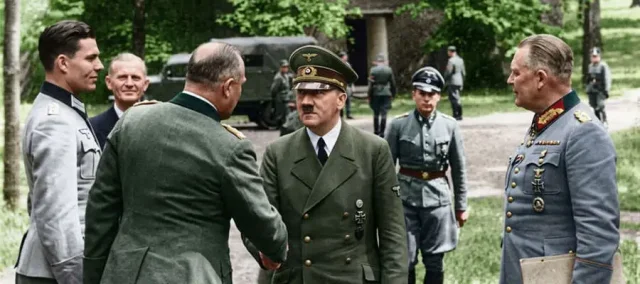
At 'Wolfschanze,' Hitler began the New Year once again, fired with optimism. He had convinced the German people to stand fast in the face of the adversary, and through their iron will and fortitude, he promised them victory. In front of his war staff, he radiated that same confidence and instilled them with fresh hope and strength of mind.
12 results - showing 1 - 10
1 2

Latest Video...

Latest Content...

Long Reads...